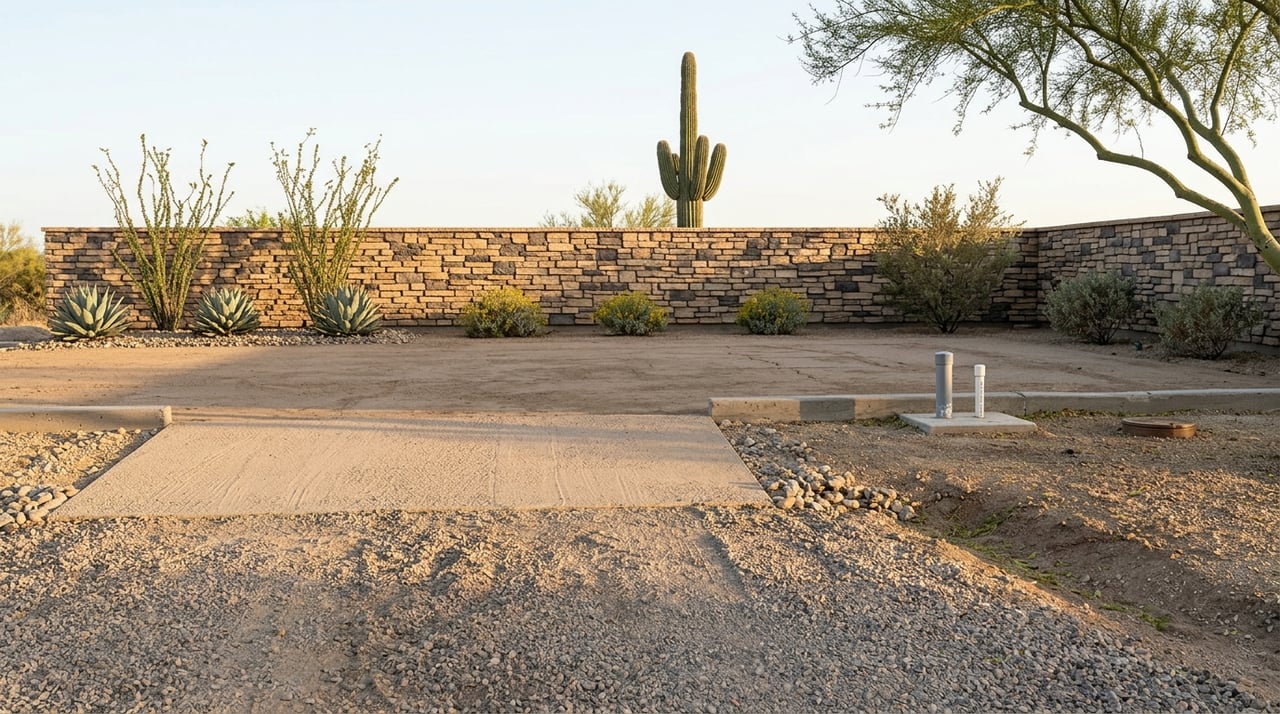
Marana Arizona Land Investment in the Foothills
May 28, 2026
May 28, 2026
If you are looking for land in Marana’s foothills, you already know the appeal: bigger views, more privacy, and the chance to build a home that fits the desert instead of settling for a floor plan that does not. What many buyers discover, though, is that a foothills parcel is rarely just a simple lot purchase. The right site can make your custom-home process smoother and more predictable, while the wrong one can bring delays, added costs, and avoidable risk. Let’s dive in.
Marana’s foothills offer a different kind of custom-home opportunity than a typical finished subdivision lot. In this part of northwest Marana, the setting itself often drives the value: mountain views, natural desert character, and larger parcels that allow a more tailored home design.
Marana’s Make Marana 2040 General Plan gives helpful context for what these areas are intended to be. Rural Residential land is meant to preserve natural desert, agricultural fields, and scenic open space, with residential density up to one dwelling unit per acre. Low-Density Residential ranges from one to two dwelling units per acre, while some areas are governed by separate master plan or specific-plan approvals.
For you as a buyer, that usually means the strongest custom-home opportunities are not random raw parcels with an uncertain future. They are often larger foothills sites that already fit the town’s planning framework or are part of a clearly defined specific-plan path.
A beautiful lot and a buildable lot are not always the same thing. In Marana’s foothills, the most important question is not just what you can see from the site, but what the site requires behind the scenes.
A practical parcel review should confirm several things early:
Marana’s Development Services One-Stop Shop is the town’s front door for planning, building, engineering, and zoning questions. The town also notes that pre-application meetings are especially useful for rezonings, final plats, and development plans, which tells you something important: even experienced buyers benefit from getting answers early.
In Marana, zoning is not just a technical box to check. It shapes what can be built, how the land can be divided, and whether your timeline stays on track.
The town’s zoning resources on Marana Maps show both zoning and specific land use for each parcel. That gives buyers a starting point, but foothills land often requires a deeper review because nearby conditions matter too, especially on sites with slopes, view corridors, or more complicated access.
Many custom-home buyers are drawn to parcels in areas planned for Rural Residential or Low-Density Residential use. These settings typically align better with larger homesites and the open-space character that attracts buyers to the foothills in the first place.
The general plan also notes that Rural Residential areas should offer access to schools, parks, trails, and open spaces. That does not guarantee every parcel has the same convenience or infrastructure, but it does show how the town views these areas in its long-range planning.
Some foothills parcels fall into areas where specific plans or other development approvals shape what comes next. Recent public notices for Luckett Road North and South, for example, show large R-144 tracts being proposed for specific-plan treatment.
For buyers, that is a reminder that land value can depend heavily on entitlement status. If a parcel’s future depends on rezoning, drainage solutions, or a more involved planning path, it may offer upside, but it may also bring more uncertainty.
Not every opportunity involves a major subdivision. Marana’s Minor Land Division process can allow a property to be divided into two or three tracts when a plat is not necessary.
Even then, the resulting lots still must conform to zoning, the General Plan, and any applicable area or specific plans. They also need required dedications, easements, rights-of-way, and any needed public health and safety improvements, so smaller land opportunities still deserve careful review.
For custom-home sites in the foothills, utility planning is often one of the biggest value drivers. A parcel may look ideal on paper, but if water, wastewater, or access is uncertain, your costs and timeline can change quickly.
Marana’s water-availability page says its lookup tool is the starting point for identifying the water and wastewater provider, and the town cautions that not all properties have infrastructure available. The town also states that it reviews requests within 10 business days, which makes this a smart early step in your due diligence.
Marana Water reports that its Assured Water Supply designation recognizes enough water for 15,353 acre-feet per year for more than 100 years. That is useful context for buyers looking in service areas connected to Marana Water.
Still, water service is parcel-specific. Marana’s final plat checklist contemplates either Town of Marana Water or City of Tucson Water, which means your actual provider depends on the property.
Wastewater planning matters just as much. Marana’s final plat checklist shows that wastewater approval may come from either the Marana Water Director or the Pima County Regional Wastewater Reclamation Department, reinforcing that sewer availability is not automatic.
If a parcel is not served by municipal sewer, Pima County regulates onsite wastewater treatment systems, commonly called septic systems, and permits are required before construction and use. For many rural and foothills parcels, septic feasibility should be treated as a first-stage review, not a last-minute item.
In the foothills, legal and physical access can be just as important as utilities. A parcel may have the right size and views, but if ingress, egress, roadway layout, or right-of-way needs are unresolved, those issues can affect both design and cost.
Marana’s final plat checklist requires streets, right-of-way widths, ingress and egress easements, and sight-visibility triangles to be shown. The same checklist also states that new and existing utilities within or contiguous to the site generally must be placed underground, except for certain high-voltage lines.
That matters because access improvements are not always minor. In more rugged terrain, road alignment and emergency access can become a major part of the feasibility picture.
The Tortolita foothills are attractive for obvious reasons, but the same terrain that creates dramatic homesites can also make development more complex. In Marana, slope, drainage, and wildfire considerations are all part of the land story.
The town’s site-analysis checklist for rezonings and specific plans requires review of topography, slopes of 15 percent or greater, hydrology, utilities, viewsheds, vegetation, wildlife, and traffic and access. That tells you that hillside parcels are rarely plug-and-play.
Marana’s general plan explains that stormwater runoff from the Tortolita Mountains creates the Tortolita Fan. It also notes that undersized culverts under the Union Pacific Railroad and limited culverts under I-10 can contribute to ponding and flooding in some areas.
For you, this means drainage review should be part of early due diligence. A parcel’s topography and flood-related conditions can influence home placement, grading costs, driveway design, and overall build strategy.
Marana’s street standards classify terrain with an average cross slope of 15 percent or more as mountainous terrain. In those conditions, roadways may require benching, hillside excavation, additional right-of-way, longer alignments, or alternative access.
The grading standards show why this matters financially. Depending on the slope, a site may require revegetation, clean landscape rock, riprap, or retaining walls, all of which can affect both budget and design flexibility.
The general plan identifies the foothills as part of the wildland-urban interface, where dry scrubland and invasive vegetation can increase wildfire risk. Conservation issues also shape land use in this area.
That does not make the foothills any less desirable, but it does mean site planning should account for natural conditions from the start. Buyers who understand that early are usually in a better position to compare parcels realistically.
In the foothills, views are not just a lifestyle feature. They are also part of the entitlement and design conversation.
Marana requires applicants in rezonings and specific plans to identify viewsheds, high-visibility areas, buffers, and mitigation measures. In practical terms, that often means parcels with preserved mountain views, less severe grading, and clearer build envelopes can be harder to find.
That scarcity can support stronger buyer demand. It is not a formal pricing rule set by the town, but it is a logical market effect when the most buildable, best-positioned view parcels are limited.
When you compare land opportunities in Marana’s foothills, it helps to think in terms of risk, not just price. A lower-priced parcel may seem attractive at first, but if it depends on rezoning, major grading, septic uncertainty, or difficult access, the true cost can rise quickly.
The highest-quality sites are usually the ones with a clear zoning path, a workable water and wastewater strategy, and defensible access and grading conditions. Those are often the parcels that support a smoother design-and-build process and protect value over time.
A smart review process often includes:
Foothills land purchases tend to reward experience. When you are evaluating a custom-home site, you are not only buying acreage. You are buying a development path, a construction reality, and a long-term lifestyle decision.
That is why many buyers benefit from working with someone who understands not only luxury homes, but also lot quality, construction considerations, and the way northwest Tucson and Marana properties come together in the real world. A measured, detail-first approach can help you avoid overpaying for uncertainty and focus instead on parcels that truly fit your goals.
If you are considering a custom homesite in Marana’s foothills, a private, expert review can help you weigh the lot’s promise against its real-world buildability. To discuss land opportunities, custom-home sites, or next steps with discretion and clarity, request a private consultation with Suzie Corona.
Get assistance in determining current property value, crafting a competitive offer, writing and negotiating a contract, and much more. Contact me today.