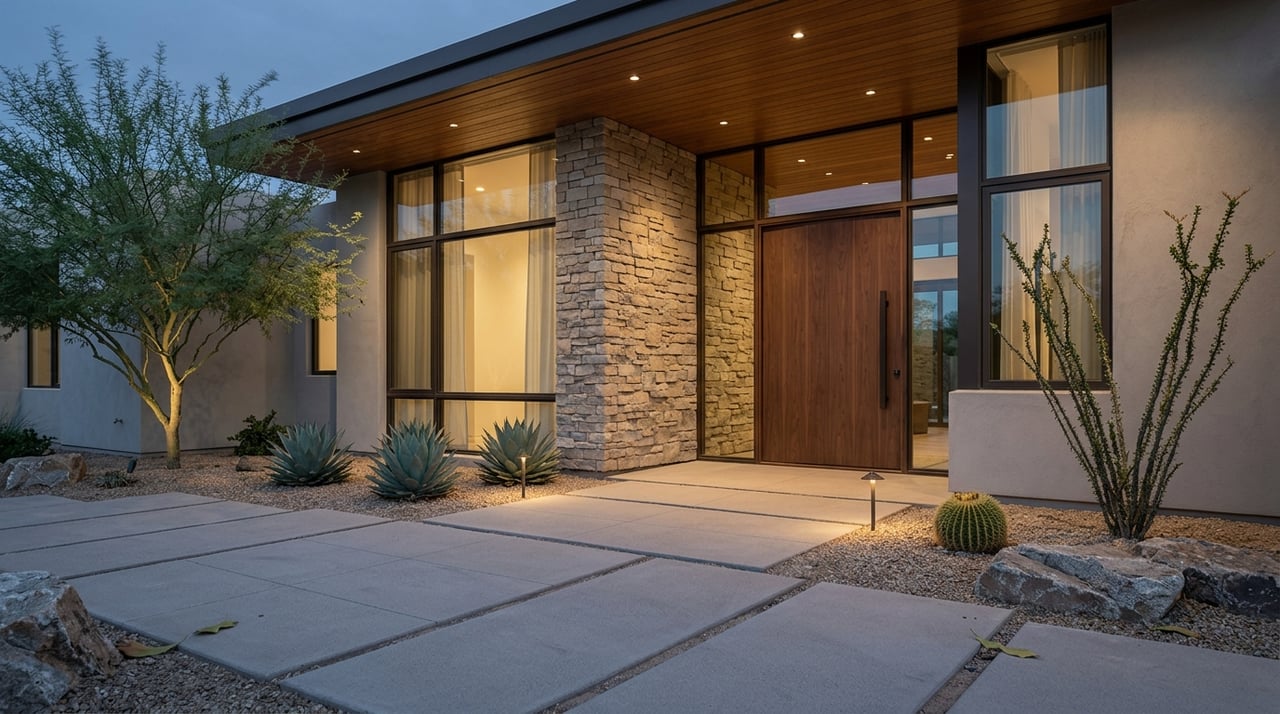
Stone Canyon Luxury Home Design Trends and Styles
June 11, 2026
June 11, 2026
What makes a luxury home in Stone Canyon feel like it truly belongs? It is not just the size, the finishes, or the views. In this part of Oro Valley, architecture is carefully shaped by the desert, the mountains, and a design review process that protects the community’s overall character. If you are buying, building, or selling here, understanding those architectural cues can help you read the market more clearly and appreciate what gives these homes lasting appeal. Let’s dive in.
Stone Canyon is a 1,400-acre private residential golf community at the base of the Tortolita Mountains, with views toward the Santa Catalina Mountains. That setting does more than create a dramatic backdrop. It influences how homes are sited, how outdoor spaces are designed, and which architectural styles feel natural here.
The lifestyle also supports that design direction. The club description highlights covered seating, an outdoor bar and fire pit, and broad views, while the health and fitness amenities include an outdoor jacuzzi, pool, tennis, pickleball, and guided hiking. In other words, homes in Stone Canyon are designed to support outdoor living just as much as indoor comfort.
Tucson’s climate explains many of the features you see throughout Stone Canyon. According to NOAA and the National Weather Service, Tucson has an annual average temperature of 70.6°F, receives 10.61 inches of precipitation per year, and sees 68 days each year at 100°F or hotter.
Those conditions make certain design choices practical, not just beautiful. Shade matters. Courtyards matter. Low-water landscaping matters. When you see deep overhangs, protected patios, and drought-conscious plantings, you are looking at architecture that responds directly to how people live in the Sonoran Desert.
Stone Canyon is a curated community, not a mix of unrelated home styles. Preliminary designs must be reviewed by the Design Review Committee before final plans go to the Town of Oro Valley. That review process helps preserve a consistent look that works with the desert setting.
The community guidelines allow styles such as Santa Barbara, Santa Fe, Southwest Contemporary, Mexican Colonial, Pueblo, Tuscan, Spanish Colonial, Territorial, and Mission, as long as they blend with the landscape. The guidelines also list prohibited examples, including French Country, Normandy, Tudor, English, Colonial, Log, and ultra-modern designs.
That means the visual identity of Stone Canyon is broad enough to offer variety, but focused enough to feel cohesive. You are more likely to see homes that reflect desert contemporary or Southwestern custom estate design than styles that feel imported from very different climates and regions.
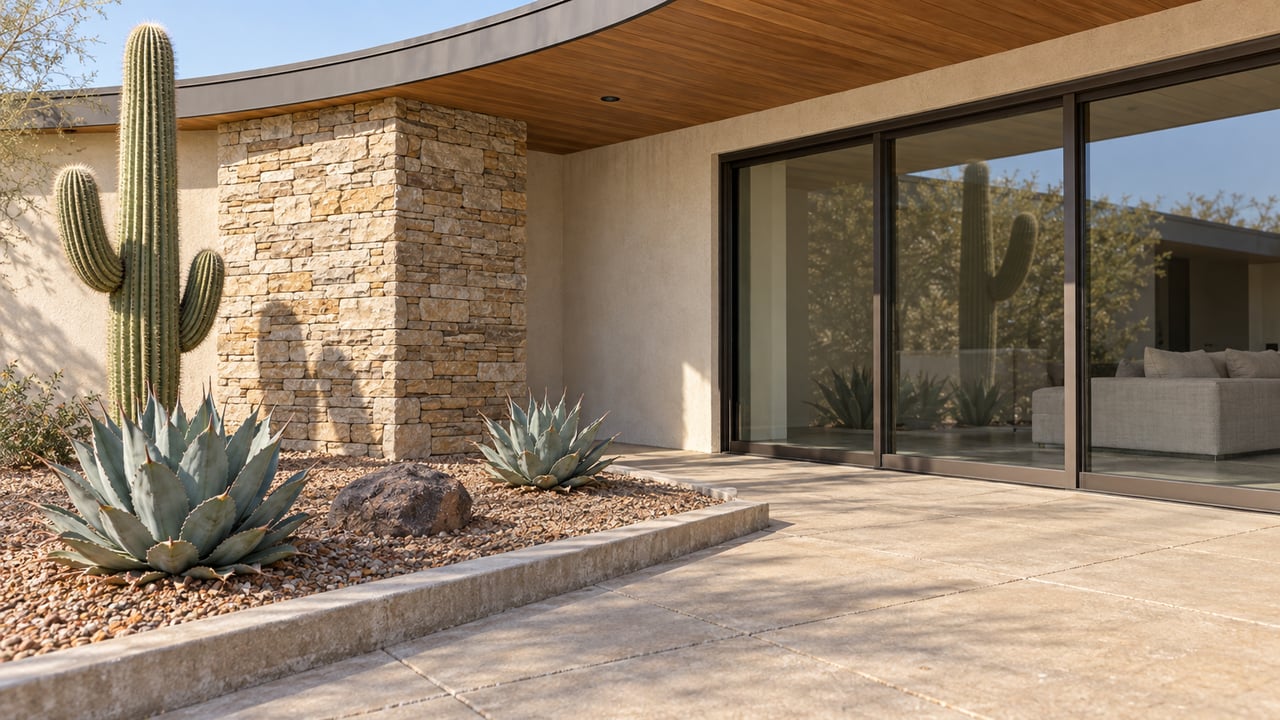
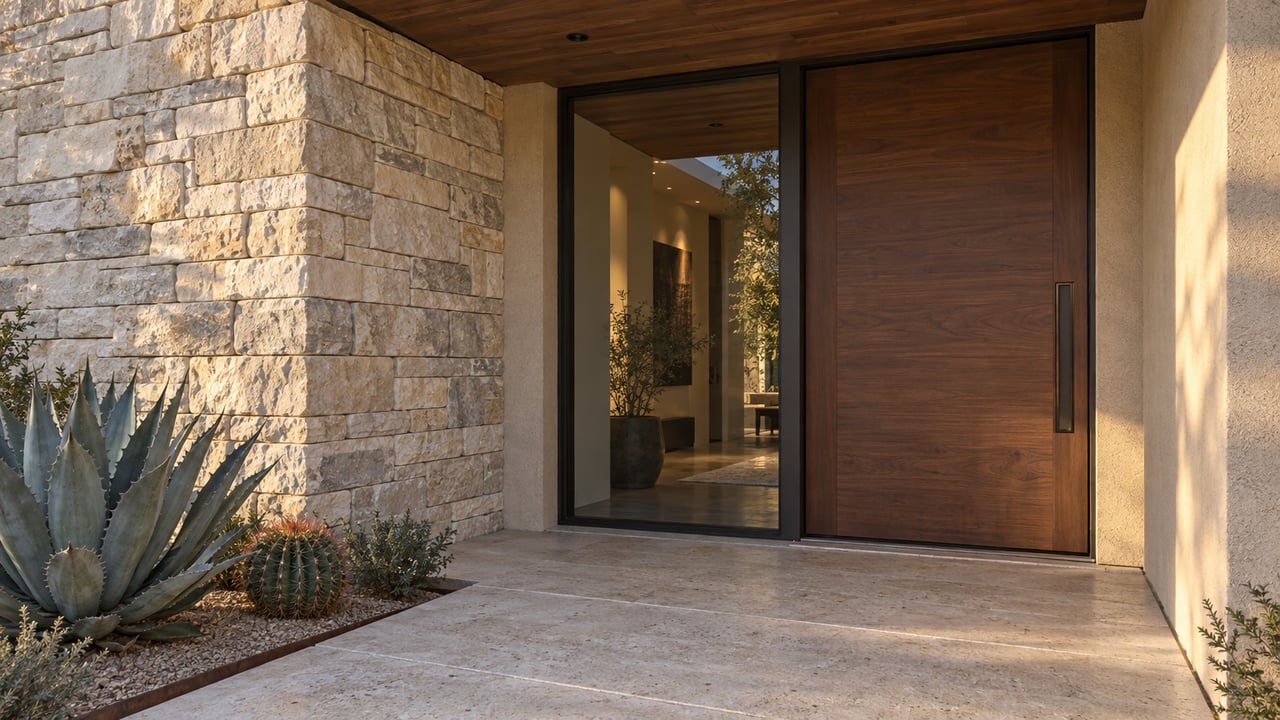
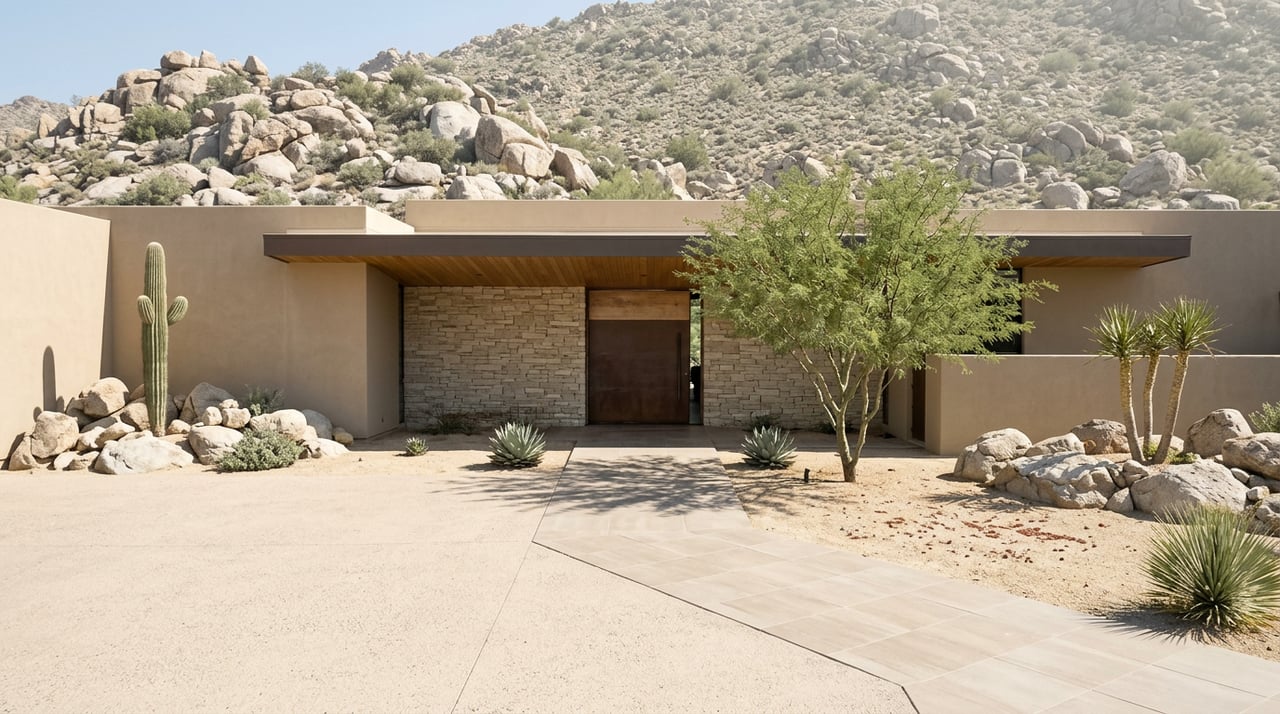
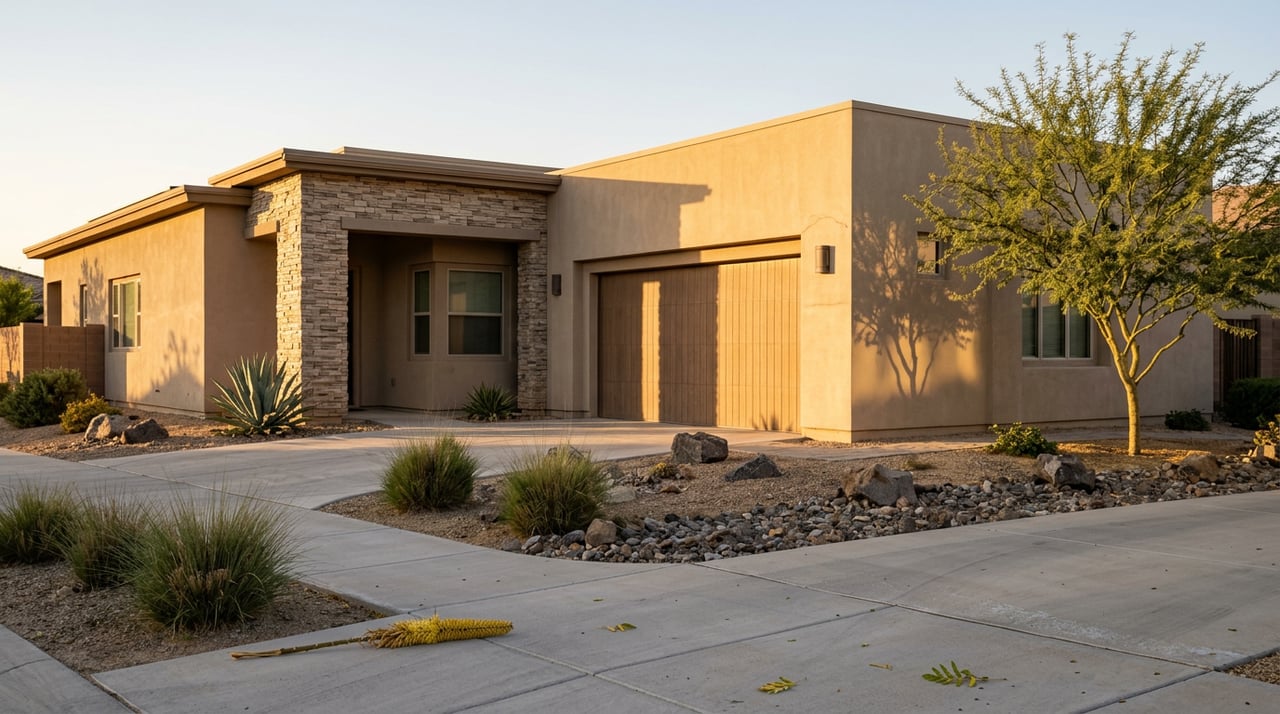
Even when homes differ in style, they often share the same architectural vocabulary. Stone is expected to be a meaningful exterior element, and homes must use at least two distinct exterior materials. Colors are generally subdued and desert-friendly, which helps buildings sit more naturally within the surrounding terrain.
Rooflines also play a major role. The guidelines favor low or flat roofs, along with layered details such as shade structures, roofline breaks, patios, courtyards, and screened service areas. Together, these elements create homes that feel grounded, private, and responsive to the climate.
In Stone Canyon, materials do more than add texture. They help connect the house to the land. Some of the most recognizable combinations include:
This is one reason the community feels visually refined. The homes may vary in expression, but they often share a thoughtful material palette that supports a calm, cohesive streetscape.
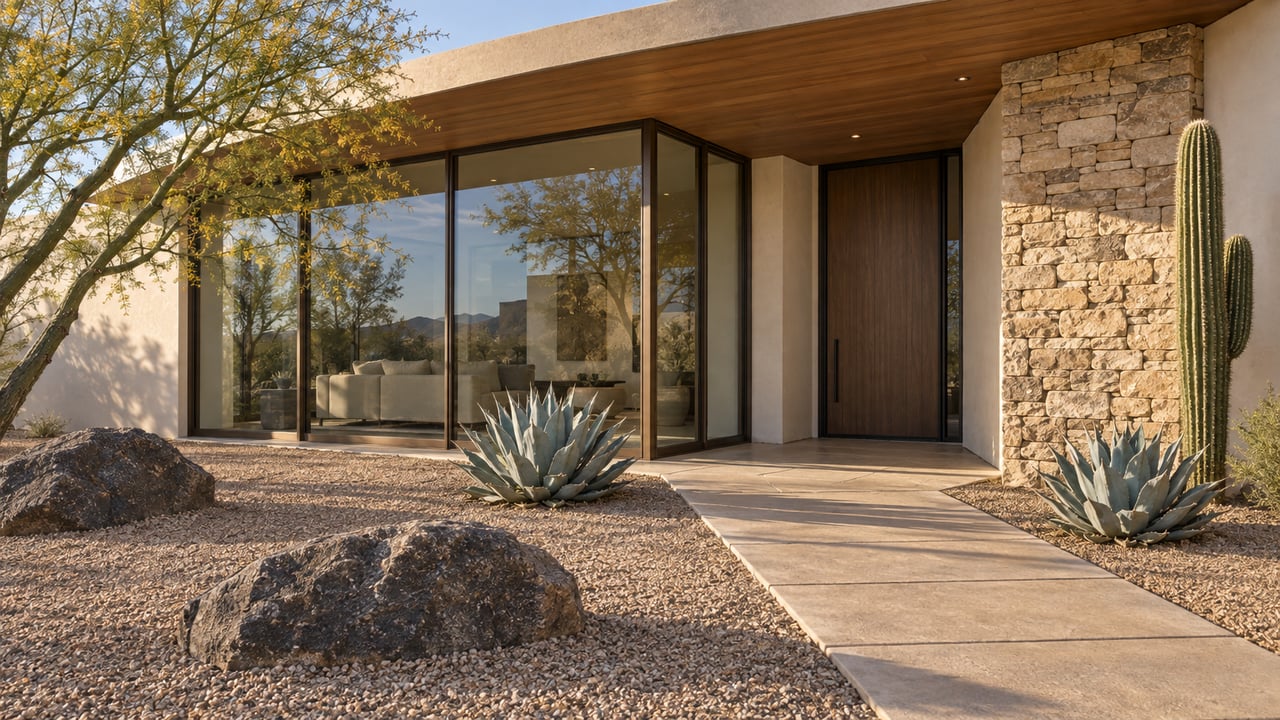
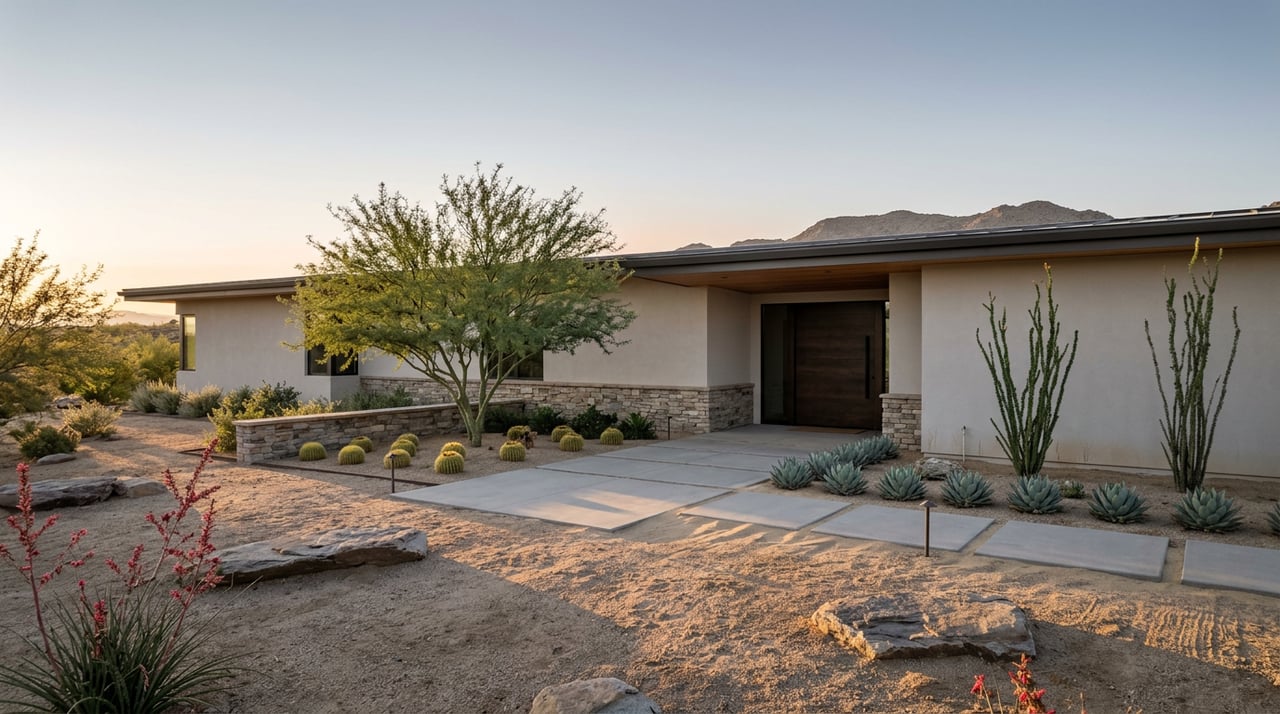
Landscaping is not treated as an afterthought. The guidelines call for drought-resistant, water-conserving landscaping that works with the indigenous plant palette. Open space and view corridors are also protected, which reinforces the idea that the lot itself is part of the design.
For you as a buyer or seller, that matters. A well-designed Stone Canyon property is not just a home placed on a lot. It is a carefully composed relationship between structure, terrain, views, privacy, and low-water outdoor living.
Public-facing history and current listings suggest that Stone Canyon has a few strong style trends rather than one single look. The community history notes a strong Tuscan thread, especially in areas like Tuscan Estates and Stonegate. More recent listings point to a visible mix of contemporary and desert-contemporary homes, Santa Barbara-influenced homes, Tuscan country homes, and Mediterranean homes.
Taken together, the market appears to favor two broad families of design. One is the cleaner, more modern desert estate. The other is the warmer Southwestern, Mediterranean, or Tuscan-inspired custom home. That is not an official style census, but it is a practical way to understand what buyers are most likely to encounter in the community today.
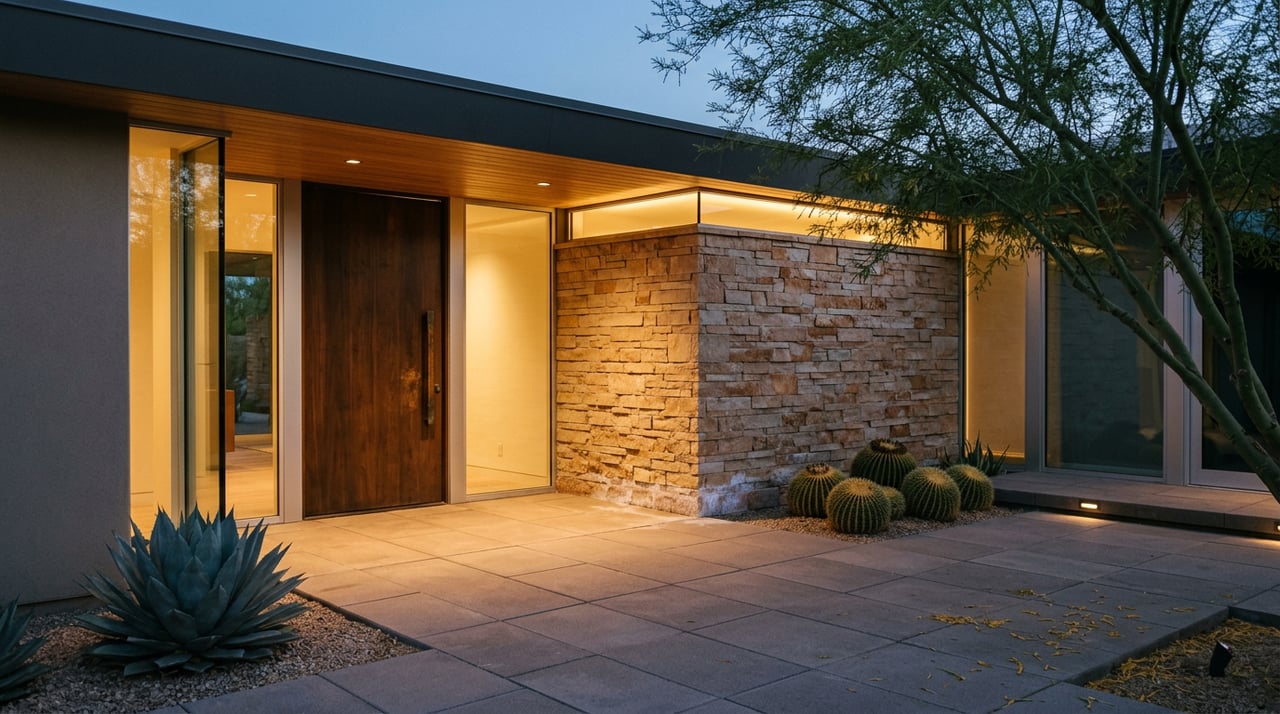
Desert contemporary homes often appeal to buyers who want clean lines, open layouts, and a strong connection between inside and outside spaces. In Stone Canyon, this style still needs to work with the desert setting and the design guidelines. So while the look may feel current, it is not typically stark or overly experimental.
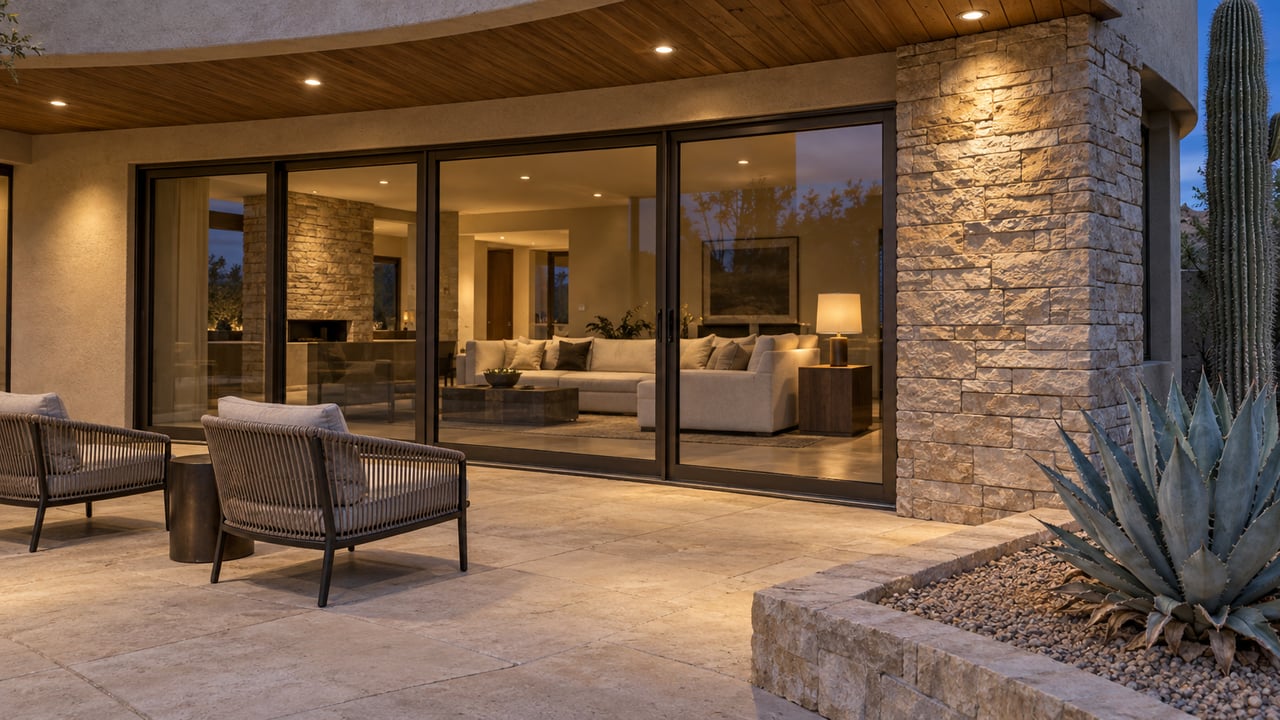
You will often see low-slung massing, restrained color palettes, expansive glass, and shaded outdoor rooms. Stone and stucco textures help soften the modern lines, while courtyards, patios, and mountain-facing outdoor areas keep the home grounded in its setting.
In this style category, the standout features are usually:
These homes often feel especially aligned with the lifestyle side of Stone Canyon, where outdoor gathering space is central to daily living.
Stone Canyon also has a long-standing appreciation for warmer, more traditional desert expressions. Tuscan, Santa Barbara, Santa Fe, Territorial, and Spanish Colonial influences all fit within the approved vocabulary when they are executed in a way that complements the site.
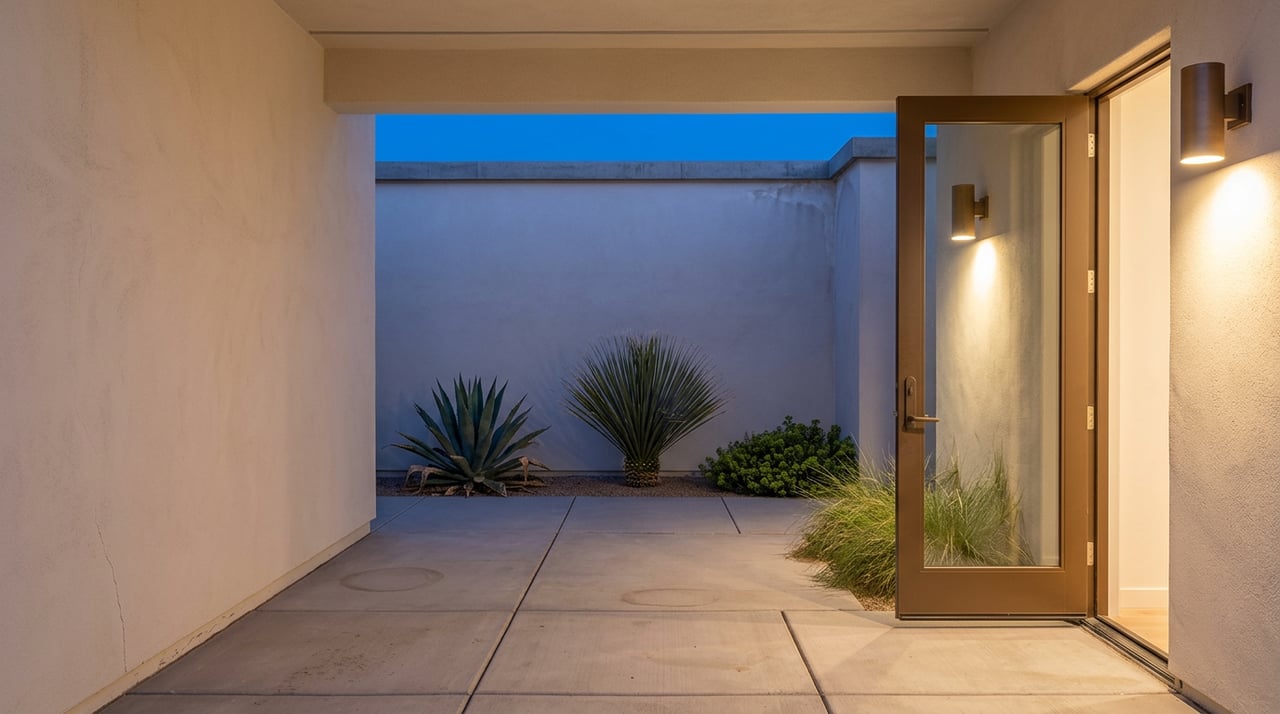
These homes often bring a softer and more textured feel. You may see richer stonework, layered rooflines, sheltered courtyards, arched openings, and a stronger sense of enclosure around outdoor spaces. In a community where privacy, views, and shade all matter, those details remain highly relevant.
In Stone Canyon, architecture cannot be separated from site planning. The guidelines specifically address building orientation, golf-course lots, patios and courtyards, pools and spas, driveways, lighting, and the screening of service areas. Open space and view corridors are central to the design approach.
That is why the best homes here are often best described as landscape-first residences. They are designed around how the lot captures mountain views, protects privacy, and creates comfortable outdoor living zones. The architecture succeeds not only because of what the house looks like, but because of how it sits on the land.
Community history notes that some owners purchased adjacent lots to protect views or expand privacy. That detail says a lot about what people value in Stone Canyon. A premium home here is often tied as much to its positioning and surroundings as to its square footage or finish level.
For buyers, this means you should look beyond interior design alone. For sellers, it means the story of your property may be strongest when it highlights view preservation, lot relationship, outdoor room design, and the way the home engages the desert environment.
If you are shopping for a luxury home in Stone Canyon, it helps to know that style is only part of the value equation. The strongest properties tend to combine approved architectural character with thoughtful orientation, durable materials, usable outdoor space, and protected sightlines.
As you compare homes, pay attention to how each property handles shade, privacy, and flow. Notice whether the design feels connected to the lot and the mountains around it. In a market like this, architectural quality is often expressed through restraint, proportion, and site sensitivity rather than through excess.
If you are preparing to sell, architectural positioning can help shape your marketing story. Instead of describing a home in generic luxury terms, it is more effective to frame it within the styles and features that buyers already recognize in Stone Canyon. Desert contemporary, Southwestern custom estate, Tuscan-influenced, Santa Barbara-inspired, and similar language can be useful when it reflects the home accurately.
Just as important, buyers in this market often respond to material quality, view orientation, and outdoor livability. Stone details, subdued desert tones, low rooflines, courtyards, covered patios, and landscape integration are not small details here. They are part of what makes a Stone Canyon home feel authentic and desirable.
In a community with design guidelines, custom homes, and view-sensitive lots, architectural knowledge is not just nice to have. It can shape how you evaluate a property, price a home, or position it for the market. Understanding what the community permits, what buyers expect, and how site planning influences value can make a meaningful difference.
That is especially true in Stone Canyon, where architecture, land, and lifestyle are closely tied together. A home here is rarely just a structure. It is a custom response to the desert, the mountains, and the way you want to live.
If you are considering a move in Stone Canyon, working with someone who understands the community’s architectural language, lot dynamics, and custom-home history can help you make more confident decisions. For discreet, expert guidance, Suzie Corona offers a private, high-touch approach shaped by deep Stone Canyon experience.
Get assistance in determining current property value, crafting a competitive offer, writing and negotiating a contract, and much more. Contact me today.