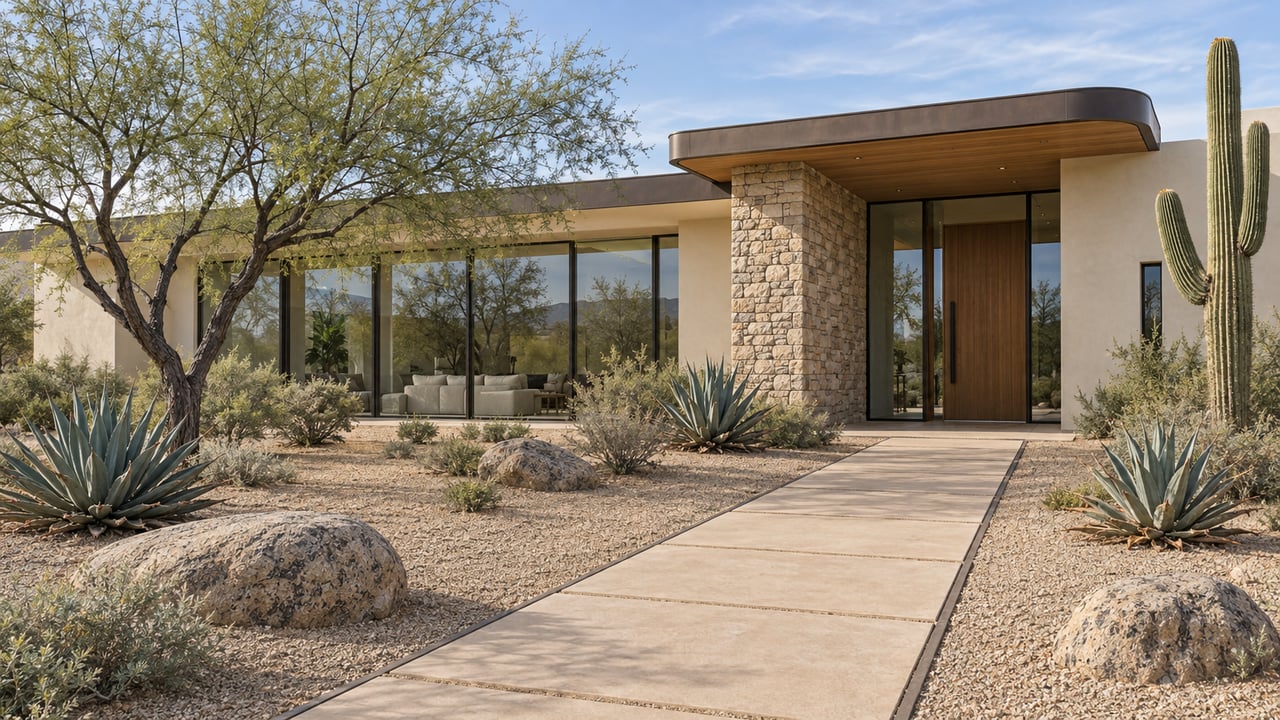
In Stone Canyon, the Tax Bill Comes With the House Until You Build One
November 5, 2026
November 5, 2026
Stone Canyon sells both resale homes and lots. Property taxes involve the parcel's limited property value, its assessment ratio and the rates set by taxing jurisdictions.
Arizona taxes homes on their Limited Property Value, or LPV, rather than market value. In 2012, voters approved Proposition 117, which made LPV the single taxable value and generally limited its growth to 5% a year starting in tax year 2015. The formula sits in A.R.S. § 42-13301:
"The limited property value of property for property taxation purposes is the limited property value of the property in the preceding valuation year plus five per cent of that value."
The same statute says LPV can never be higher than the property's current full cash value. LPV is also one figure for the whole parcel, with no separate numbers for land and house.
Under A.R.S. § 42-13302, "a change in the occupant or classification of a single-family residence is not a change in use, in and of itself."
Section 42-13302 lists events that make the Assessor set LPV "at a level or percentage of full cash value that is comparable to that of other properties of the same or a similar use or classification." One of them is property "modified by construction, destruction or demolition since the preceding valuation year such that the total value of the modification is equal to or greater than fifteen percent of the full cash value." The same list includes a qualifying change in use, property left off the rolls in error, and a parcel split, subdivided or consolidated during the valuation year.
According to the Arizona Joint Legislative Budget Committee, a property's tax depends on three factors: its limited property value, an assessment ratio based on its use, and the tax rate per $100 of net assessed value that each taxing jurisdiction sets. The Arizona Department of Revenue's 2027 Final Property Class Summary, dated August 18, 2025, shows how those ratios differ.
| Property type | Legal class | Assessment ratio |
|---|---|---|
| Agricultural, vacant land and non-profit real property | 2.R | 15% |
| Primary residence | 3.1 | 10% |
| Non-primary residential | 4.1 | 10% |
| Rental or leased residential | 4.2 | 10% |
The 2027 class summary lists a 10% assessment ratio for both primary residences in class 3.1 and non-primary residential property in class 4.1.
A.R.S. § 15-972 addresses a reduction in the school-district portion of the primary property tax on residential property. The statute defines that property as the owner-occupied primary residence in class 3. The reduction is based on the school tax rate and the home's assessed value, and the reduction for a parcel "shall not exceed $600," with a separate exception for cooperative apartments. Section 15-972 also requires the county to check each residential parcel's total primary taxes against the limit in Article IX, Section 18 of the Arizona Constitution and to credit any amount above it.
The Pima County Assessor's Affidavit for Primary Residence Classification asks for the parcel number, the month and year the home became the primary residence, and a signature under penalty of perjury.
The Town's FY 2026/27 budget summary, released September 18, 2026, says Oro Valley does not levy a municipal property tax. An Oro Valley bill is made up of county, school, college and special-district charges.
The jurisdictions in the Pima County Treasurer's rate tables include Amphitheater Unified School District, Golder Ranch Fire District, Pima Community College, the Pima County Flood Control District and the Pima County Library District. Which of them apply depends on the parcel. Several moved in 2026:
According to the Pima County Assessor's calendar, Notices of Value are mailed on or before March 1. The Treasurer's general information page says the limited value on the notice is used for the next tax year.
What ratios does the 2027 class summary list for the residential categories in the table? The summary lists a 10% assessment ratio for each of those residential categories.
This post is general information about how Arizona's property tax rules work. It is not legal, tax or financial advice, so please confirm your own parcel and situation with the Pima County Assessor and your tax professional.
If you're weighing a finished Stone Canyon home against a lot and a build, Suzie Corona brings developer and construction experience to that comparison. Request a private consultation to discuss the parcels you are considering.

Get assistance in determining current property value, crafting a competitive offer, writing and negotiating a contract, and much more. Contact me today.